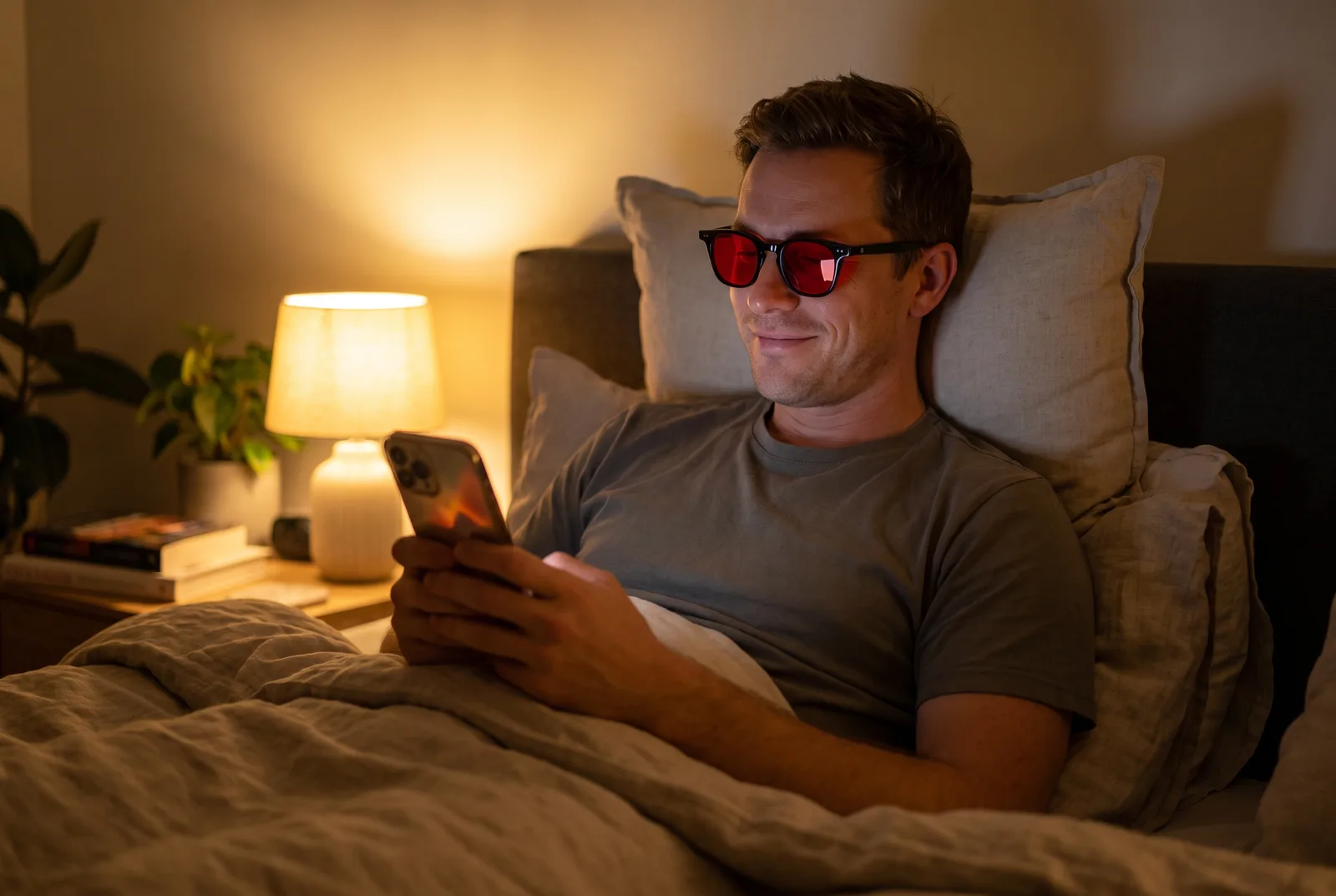
It is 11 pm. The day is over, the lights are low, and you are still scrolling. You are tired, you know you should sleep, and yet your mind will not switch off.
You did not do anything strange today. That is exactly the point.
The signal nobody thinks about
Your body keeps time with light. Bright, cool white light says it is daytime. Dim, warm light says the day is ending. For most of history the only bright light was the sun.
Now the brightest thing in your evening is a screen, held a hand's width from your face long after dark. Your eyes read it as daylight, and your body can take it as a reason to stay alert.
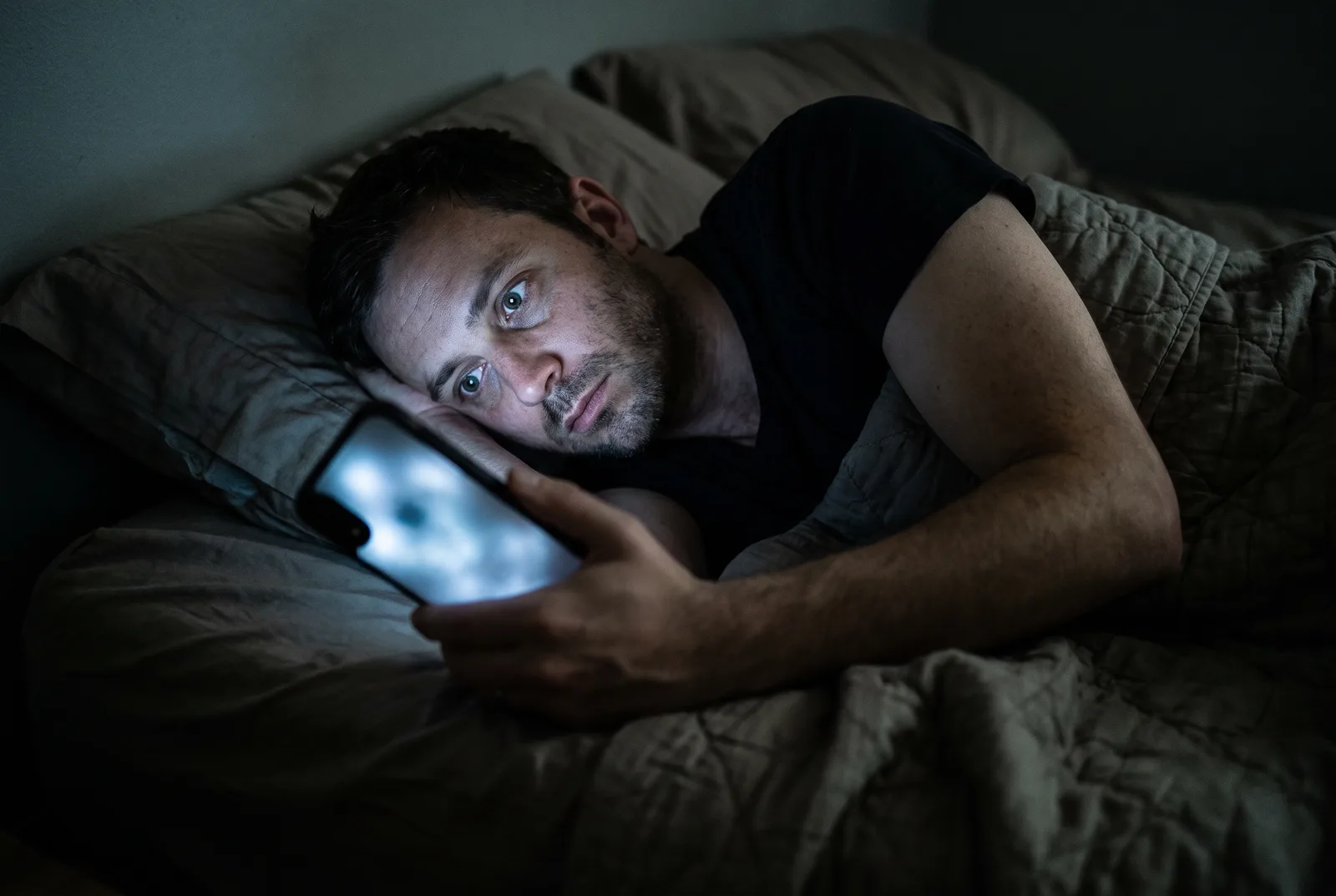
If this sounds like your night
- If you are tired but cannot switch off,
- if you fall asleep late and wake up feeling flat,
- if one more video turns into an hour,
- then you are in very good company. It includes almost everyone with a phone.
If that was your night, there is a simple way to take the light out of it.
Why the usual fixes keep failing
Willpower does not work at 11 pm, when you are tired and the phone is right there. Night mode on one screen helps a little, but the laptop, the TV and the white ceiling light are all still on.
Fixing the night means changing the light that reaches your eyes, not promising yourself to try harder tomorrow.
A different approach: filter the light at the source
That is the idea behind Warblue glasses. Instead of fighting the screen, you wear glasses whose lenses filter part of the blue light before it reaches your eyes, without changing anything else about your evening.
For the evening there is Da Vinci, with red lenses: the strongest filter of the four. For your screen hours during the day there is Galileo, with yellow lenses. Together they cover your whole day.
- GalileoDay84%
- NewtonEvening96.98%
- Da VinciNight99.14%
- EdisonAnytime26%
Share of blue light blocked by each lens, as published by Warblue.
Doctors around the world recommend WARBLUE
A small selection of the real posts they share on Instagram.
 a_shabana
Stories
Dr. Ahmed Shabana
Ophthalmologist · United Arab Emirates
58.9K followers
 dr.pride.pe
Reel
No todo está en la mente, muchas veces también puede estar relacionada con alteraciones biológicas y hábitos que afectan directamente al sistema nervioso
Dra. Andrea Reyes
Aesthetic & longevity physician
399K followers
 dr.yasmeen_naser
Reel
الشاشة جزء من يومنا… بس تعب العين مش لازم يكون كمان
Dr. Yasmeen Naser
Cosmetic dentist · Jordan
24.2K followers
 dr.tiagodutra
Reel
Olhar para o celular logo ao abrir os olhos e continuar diante de telas até a hora de deitar envia um sinal biológico confuso para o seu cérebro.
Dr. Tiago Dutra
Physician · Brazil
358K followers
 dra.cova
Reel
Doctora Cova lo explica claro: no todas las gafas de luz azul son iguales.
Dra. Cova
Functional & longevity medicine
 dr.marcelodaia
Stories
Dr. Marcelo Daia
Physician · Brazil
15.2K followers
See what a lens does to a scene
Tap a lens, then drag the line. The right side shows the same photo through that lens, so you know what to expect before you wear them.
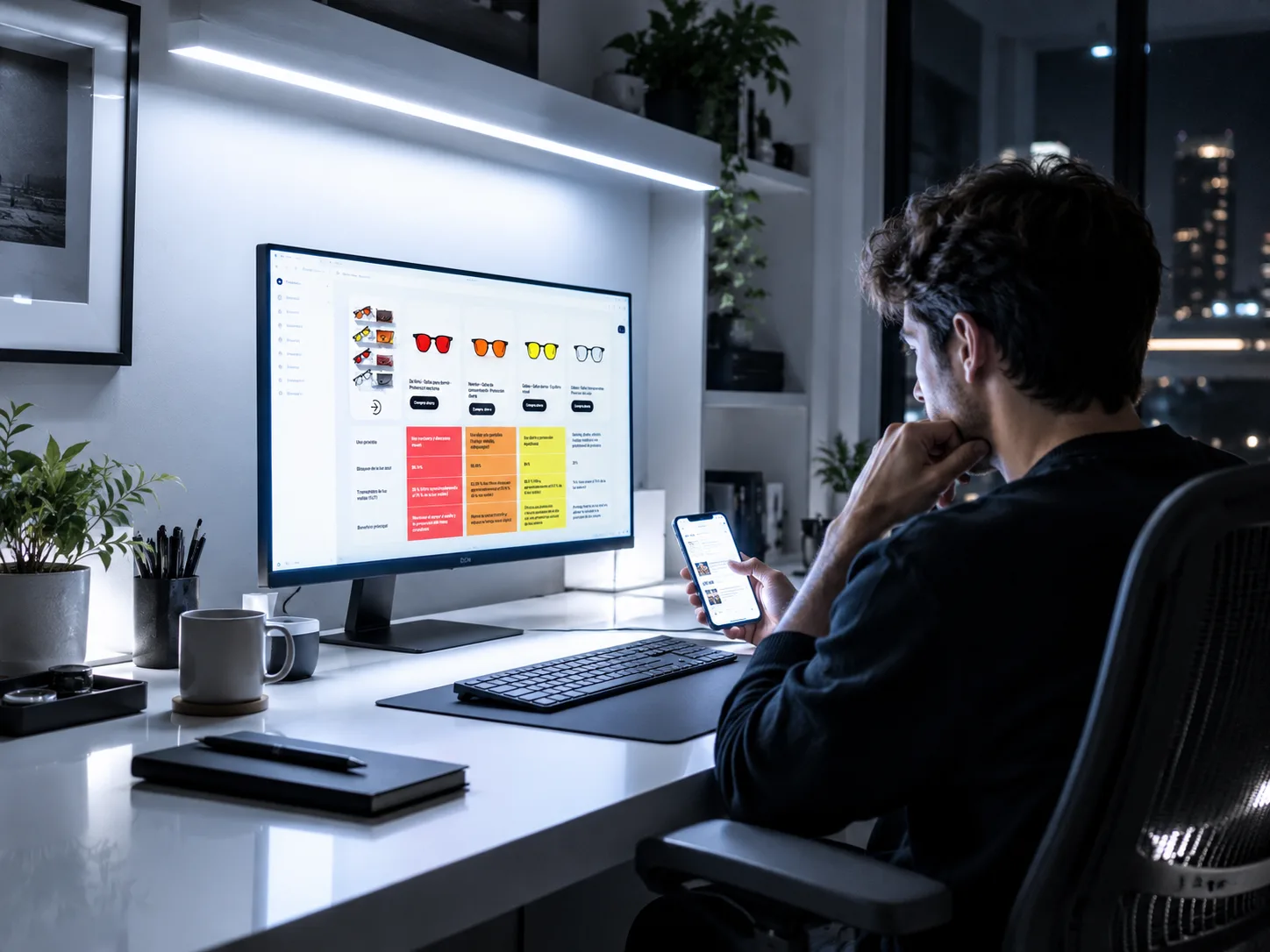
Softens glare while colors stay close to natural.
An indicative simulation of the tint. The real effect may vary with the light and your screen.
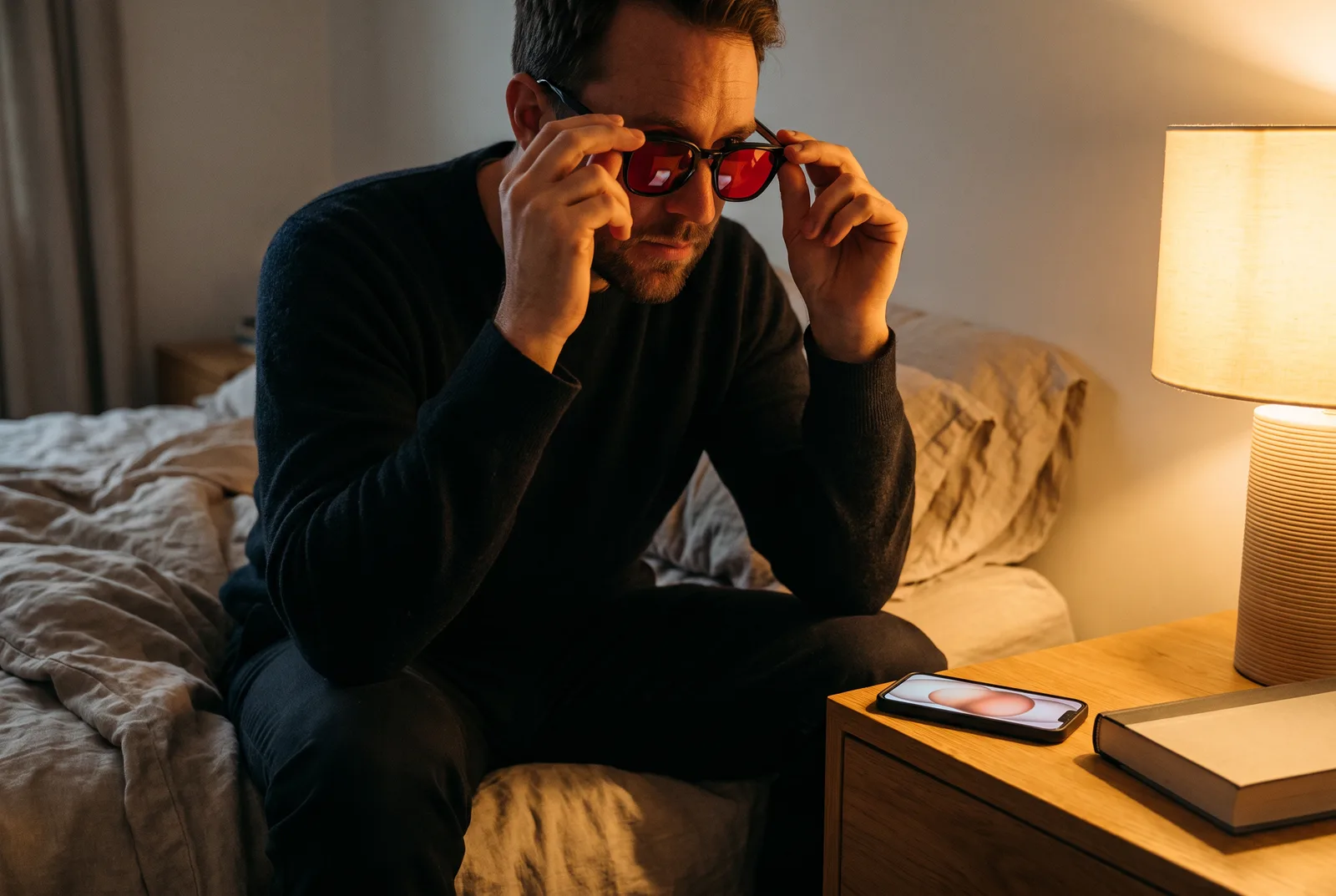
Warblue publishes the blue light each lens blocks. No vague promises: the number is on the table above.

“I have felt an improvement in my sleep quality, super comfortable, and the comfort is visually pleasant.”
Translated from Spanish
Do I wear them all evening?
Wear Da Vinci whenever screens and white lights are on in the evening. Some customers tell us they put them on a few hours before bed, but there is no rule: they are glasses, not a treatment.
Will I notice the colour of the lenses?
Yes. Galileo is a clear yellow tint and Da Vinci is red. That tint is the filter doing its work, and the demo above shows what it looks like. If you want the lightest option, Edison is the nearly clear lens, with a lower filter (26%).
Will they fix my sleep?
No, and nobody honest will tell you that. They filter part of the blue light that screens and white lamps send to your eyes in the evening. A regular bedtime, a dark room and the rest of your routine still matter.
Why two pairs and not one?
Your screen hours and your evening are different moments, and a lens built for one is not the best for the other. That is why Galileo covers the day (84%) and Da Vinci the night (99.14%). The Day & Night Bundle puts both in one order.
What if they are not for me?
Warblue includes a 1-year warranty against manufacturing defects, and unused pairs in their sealed packaging can be returned within 30 days. The full details are in the returns policy linked at the bottom of this page.
Not sure which pair fits your day? Answer a few quick questions and see the one that matches.
Take the 2-minute quizReady? Both pairs of glasses, with the lens colours and what is in the bundle, are one tap away.
Get the Day & Night pair2 pairs: yellow for the day, red for the night